
Developmental Milestones in Children Part 1
Retained Primitive Reflexes: When Early Survival Patterns Linger
Retained Primitive Reflexes are one of those quietly influential pieces of human development that most people have never heard of, yet many live with the effects every single day.
If you have ever wondered why some people struggle with coordination, focus, emotional regulation, posture, anxiety, chronic tension, or fatigue despite doing all the right things, this subject matters. A lot.
Primitive reflexes are not problems. They are ancient survival programs, beautifully designed to help us arrive safely into the world. Issues arise only when these reflexes do not integrate fully through development and instead remain active beneath the surface.
This blog explores what Retained Primitive Reflexes are, why they matter, common symptoms, key types of reflexes, and how they can still be shaping adult bodies and nervous systems long after childhood.
What are Primitive Reflexes?
Primitive reflexes are automatic movement patterns governed by the brainstem and nervous system. They appear in utero and during infancy, supporting survival, birth, feeding, bonding, and early movement.
Examples include:
The startle response that helps a newborn inhale
Reflexes that support sucking and swallowing
Patterns that initiate rolling, crawling, and early postural control
These reflexes are meant to be temporary. As the brain develops, particularly the higher centres involved in voluntary movement, emotional regulation, and cognition, primitive reflexes should naturally integrate.
Integration does not mean they disappear. It means they are inhibited and replaced by more refined, conscious control.
Developmental Integration: The Missing Link
In an ideal developmental sequence, primitive reflexes:
Appear at the right time
Do their job
Integrate as higher brain centres mature
This process is supported by:
Natural movement
Tummy time
Crawling and cross-patterning
Sensory input
Emotional safety
When development is interrupted or altered, reflexes may not fully integrate. Instead, they remain active in the background, quietly influencing posture, behaviour, learning, and stress responses.
Why Reflexes May Be Retained
Retained Primitive Reflexes are not a sign of failure or fault. They are adaptive responses to early stress or altered development.
Common contributing factors include:
Birth trauma or medical intervention
Premature birth
Limited movement opportunities in infancy
Chronic stress in early childhood
Illness or hospitalisation
Falls or head injuries
Ongoing nervous system overwhelm
The nervous system does its best with the information it has. If safety feels uncertain, reflexes stay switched on.
Common Symptoms of Retained Primitive Reflexes
Symptoms vary widely and often look unrelated at first glance. This is why retained reflexes are frequently overlooked.
In babies and children
Delayed milestones
Poor coordination or balance
Difficulty crawling or skipping crawling altogether
Sensory sensitivities to sound, light, or touch
Emotional reactivity or frequent meltdowns
Feeding difficulties
Poor posture
Bedwetting beyond expected age
Challenges with focus, reading, or writing
In adults
Retained Primitive Reflexes can persist quietly into adulthood, often presenting as:
Chronic muscular tension or pain
Poor posture or asymmetry
Balance or coordination challenges
Anxiety or exaggerated stress response
Difficulty relaxing or sleeping
Altered emotions
Fatigue despite rest
Brain fog
Digestive issues linked to stress
Emotional overwhelm
Feeling constantly on edge
Adults often assume these patterns are personality traits or consequences of ageing. In many cases, they are nervous system habits formed early in life. Do any of these feel familiar to you?
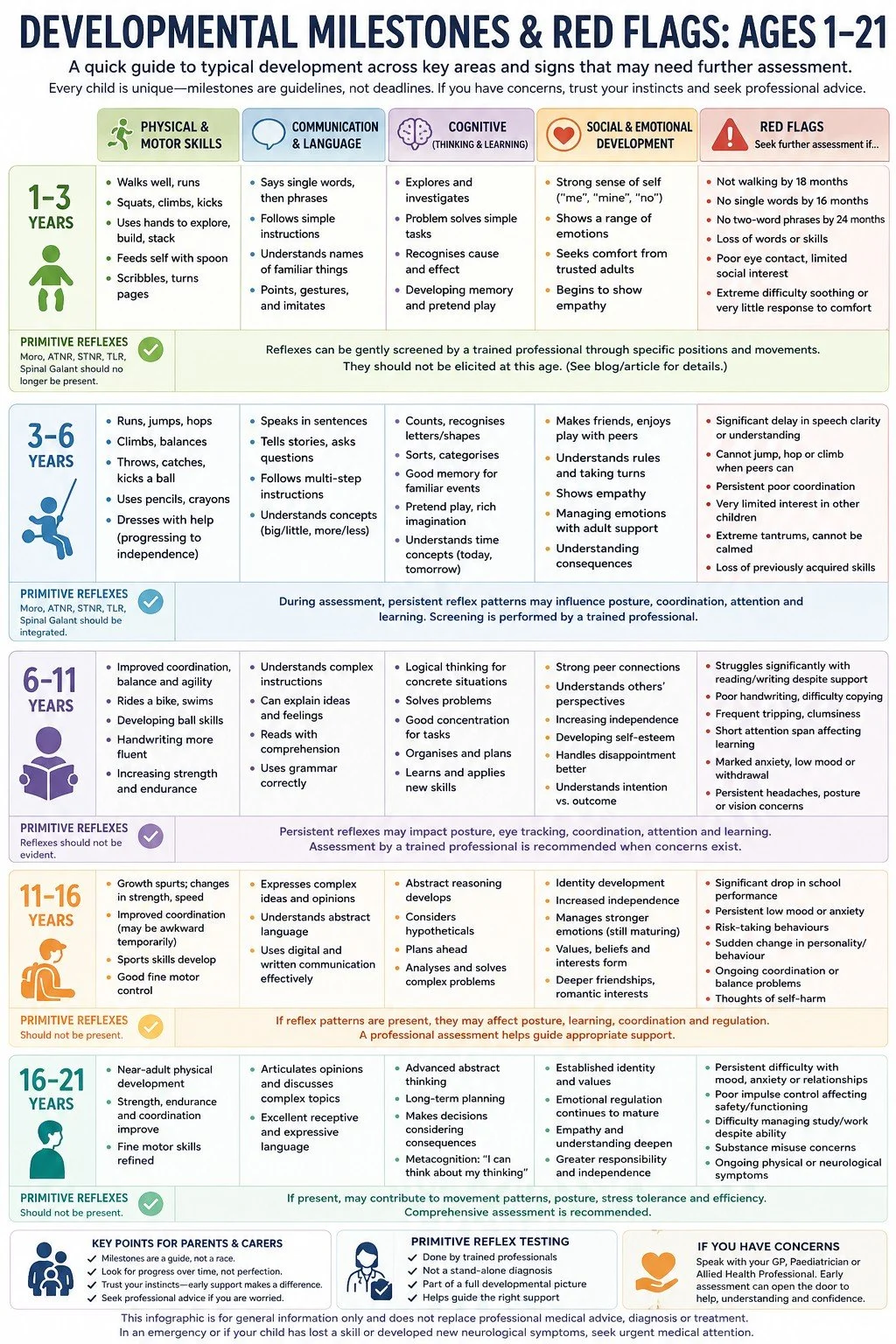
Key Types of Retained Primitive Reflexes
There are several primitive reflexes. Below are some of the most commonly retained and their effects.
Moro Reflex
The Moro reflex is the infant startle reflex. It supports the first breath and alerts caregivers to danger.
When retained, it can lead to:
Heightened anxiety
Poor stress tolerance
Overreaction to noise or light
Emotional volatility
Adrenal fatigue patterns
Feeling unsafe in the world
Adults with a retained Moro reflex often live in a constant state of low-grade fight or flight.
Asymmetrical Tonic Neck Reflex (ATNR)
ATNR supports early hand eye coordination and rolling.
When retained, it may cause:
Poor coordination between left and right sides
Difficulty crossing the midline
Reading or writing challenges
Shoulder and neck tension
One sided posture or movement dominance
In adults, ATNR retention often shows up as asymmetrical posture, chronic neck pain, or difficulty with complex motor tasks.
Symmetrical Tonic Neck Reflex (STNR)
STNR assists the transition from crawling to standing.
If retained:
Poor posture when sitting
Slouching or collapsing through the spine
Difficulty with prolonged sitting or desk work
Restlessness
Poor upper and lower body coordination
STNR retention is common in adults who feel uncomfortable sitting still or struggle with sustained focus.
Spinal Galant Reflex
The Spinal Galant reflex supports hip movement and early crawling.
When retained:
Fidgeting or constant movement
Lower back pain
Pelvic instability
Sensory sensitivity around the waist
Bedwetting in children
In adults, this reflex can contribute to chronic lower back tension and difficulty relaxing fully.
The Body Keeps the Pattern
One of the most important truths about Retained Primitive Reflexes is this: the body remembers.
These reflexes are not stored in conscious memory. They live in the nervous system, shaping posture, muscle tone, breathing, and emotional responses automatically.
This is why talking about symptoms alone often does not resolve them.
The nervous system needs a physical, sensory based invitation to reorganise. This is where Osteopathy is a unique and sophisticated tool to use.
Why This Matters in Later Life
As we age, the nervous system often has less capacity to compensate. Patterns that were manageable in younger years can become louder.
Retained Primitive Reflexes may contribute to:
Increased falls risk
Reduced balance and coordination
Heightened stress responses
Chronic pain patterns
Fatigue and reduced resilience
The good news is that the nervous system remains adaptable throughout life. With the right approach, integration is still possible.
Awareness is the First Step
Many adults experience deep relief simply understanding that their challenges are not character flaws, weaknesses, or irreversible decline.
They are patterns.
And patterns can change.
Working with Retained Primitive Reflexes is about meeting the nervous system where it is, with respect, patience, and the right kind of movement and support.
Final Thoughts
Retained Primitive Reflexes sit at the intersection of neurology, movement, emotion, and lived experience. They remind us that early life matters, but it does not define our limits.
Whether you are supporting a child, exploring your own health, or working with clients, understanding these reflexes opens a powerful doorway into nervous system resilience, regulation, and long term wellbeing.
The body is not broken. It is responding exactly as it learned to. And with the right signals, it can learn something new. That is good news.
If you have found this rather long blog useful, interesting or just want to discuss more about this subject, please contact me at the clinic or make an appointment for a more in depth consultation.
NB Everyone is unique in how they are set up. This blog, as a result, has to be generic but by making a full consultation appointment I can take my findings and your concerns and start to make a treatment plan specifically to help you.
YOUR health IS My Priority.
Gayle Palmer D.O.
Registered Osteopath, Healer, Master NLP practitioner, Hypnotherapist, Advanced Shamanic Practitioner
To make an appointment go to First Appointment Booking HERE. Please FORWARD this to a friend or family who may find it useful to make a more informed choice for their future. Thank you.
PS Part two of this Development Milestones Blog Series is here
Copyright 2026 Living Elements Clinic